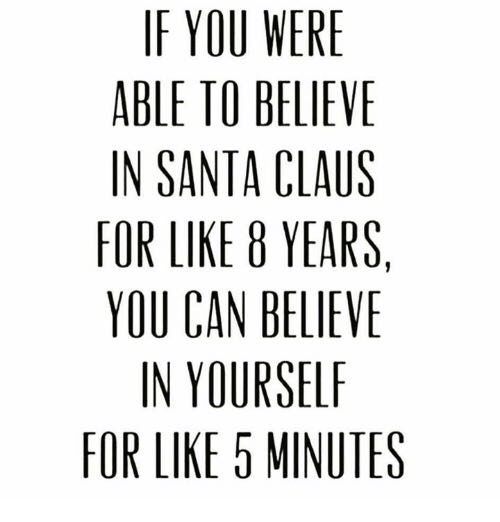
Relax. Traveling Girl has not turned into Scrooge. I did not say abandon ye all holiday cheer, I just said give yourself a break for ten minutes.
There’s so much pressure this time of year to be merry and bright and cheerful everysingledamnminute that it can get a little overwhelming. And you think if there’s a crack in your holiday veneer, not only will everyone see, but the whole kaboodle will break and you won’t be able to salvage even a thread of happy tinsel. It’ll all be over, holidays ruined.
But here’s the thing, and this is just between us: it’s not true. You can, in fact, not be all holiday sparkles and lights for a few minutes. Not only will no one notice (unless you go full on Grinch, let’s not do that, now), but your merry will actually come back stronger. Trust me on this.
Vent, yell, have a good cry, meditate, take a nap. Whatever. We’ll all still be over here shopping and prepping and planning when you’re done, and you’ll feel better. I’ve always found it liberating when I get reminders that I’m just not all that important. And I mean that in a good way – like when you go on vacation, convinced that the world may end or the office may burn down while you’re out, and you return to things exactly as you left them. No tragedy. No drama. Because, contrary to our (read: my) sometimes egomaniacal beliefs, the world and everyone in it functions just fine without our interference. So if we abdicate our devotion to holiday cheer for ten minutes and take a little time for ourselves, everyone will be ok. I promise.
If you’re really in need of a pick me up and you have two hours instead of ten minutes, I am begging you, please watch Hector and the Search For Happiness. My brother and his wife found this gem a few years back and it is SUCH a treat. The main character, Hector, in keeping with the normal theme of this blog, travels far and wide. I can’t vouch for the accurate portrayal of his adventures as I’ve never been to any of the spots he visits, but that’s not really the point. It’s a funny, happy little movie that is guaranteed to lift flagging holiday spirits. I don’t have children, but based on language, etc, I’d say it’s appropriate for teens, just not really little kids. You can find it on iTunes for sure, maybe Netflix too, and download it for your holiday travel.
While you’re taking my advice and giving the tinsel and holly routine a rest, here is precisely ten minutes of useful stuff to peruse:
First, This great article from Afar magazine on keeping your airline status next year.
Second, as some of you know, I am a Tim Ferriss fan – the below is cut and pasted from an excerpt of his new book. The manager of my office actually sent this out in his morning notes this week. Timely, given how busy we all are and the upcoming inevitable inventory of how we’ve spent our time and how we’ll spend it next year:
5 Simple Strategies For Getting Immediate Clarity and Saying “No”
Saying yes is easy. Saying no is hard.
by Tim Ferriss
Once you reach a decent level of professional success, lack of opportunity won’t kill you. It’s drowning in 7-out-of-10 “cool” commitments that will sink the ship.
I knew that successful people had a habit of saying “no,” but I didn’t understand how or why. I needed help understanding the mechanics of saying “no” and reaping the benefits, so I asked hundreds of brilliant people: In the last five years, what have you become better at saying no to (distractions, invitations, etc.)? What new realizations and/or approaches helped? Any other tips?
The answers I got to those questions formed part of what became my next book, Tribe of Mentors. Here are a few of my favorite responses:
Strategy #1: Take the Epitaph and Deathbed Tests
Tim Urban, one of the world’s top bloggers, has a strategy for saying “No” he calls the Epitaph and Deathbed test.
Here’s how it works:
“I think about what I might call the Epitaph Test. When I find myself with an opportunity, I ask myself whether I’d be happy if my epitaph had something to do with this project. If the answer is a clear no, it probably means it’s not actually very important to me. Thinking about your epitaph, as morbid as it is, is a nice way to cut through all the noise and force yourself to look at your work from a super zoomed-out perspective, where you can see what really matters to you. So I try to make my “yes” list by thinking about the Epitaph Test, and potential time commitments outside of that definition fall on my “no” list. For me, the Epitaph Test is usually a reminder to focus my time and effort on doing the highest-quality and most original creative work I can.”
For my social life “yes” list, a similar test could be called the Deathbed Test. We all hear about these studies where people on their deathbed reflect on what they regret most, and the cliché is that nobody ever says they regret spending more time in the office. That’s because a deathbed offers people a level of zoomed-out clarity that’s hard to get to in our normal lives, and it’s only when we’re lacking that clarity in the fog of our day-to-day rush that we’d think it makes sense to neglect our most important personal relationships. The Deathbed Test pushes me to do two things:
1. Make sure I’m dedicating my time to the right people with the question, “Is this someone I might be thinking about when I’m on my deathbed?”
2. Make sure I’m spending enough high-quality time with the people I care about most with the question, “If I were on my deathbed today, would I be happy with the amount of time I spent with this person?” An alternative is thinking about other people’s deathbeds — “If X person were on their deathbed today, how would I feel about the amount of quality time I’ve spent with them?”
Strategy #2: Run the decision by imaginary great-grandchildren
Terry Crews, actor and former NFL player, has a useful strategy for saying “no.” Similar to Stephen Covey’s imaginary 80th birthday exercise, Crews has an imaginary conversion with his great-grandchildren.
According to Crews:
“One approach I use is imaginary great-grandchildren. I talk to them all the time. I ask them about decisions and relationships and whether or not to continue them. They tend to speak loud and clear. “Grandpa, you shouldn’t do this, or you need to leave these people alone because we will be affected negatively, or worse, we won’t exist.” Those moments show me that this whole thing is bigger than me. It’s the realization that there is a “will to pleasure,” a “will to power” and, in the words of Viktor Frankl, a “will to meaning.” You won’t take a bullet for pleasure or power, but you will for meaning. So you sometimes have to do what I call a “crowd-thinner.” One wrong person in your circle can destroy your whole future. It’s that important.”
Strategy #3: Become aware of your emotional expression
Sharon Salzberg, co-founder of the Insight Meditation Society and New York Times bestselling author summons the courage to say “no” by becoming aware of her emotional expression.
Specifically, Salzberg does the following:
“I’ve gotten better at saying no to invitations, though I still have a ways to go! I picked up this tip from a friend, who felt she could hardly ever say no when she really needed to. In her meditation, she consciously brought up situations where she might have better said no, and she looked at what was happening in her body as she replayed the questioning. She tuned into the sensations spiraling through her stomach up into her chest, restricting her breathing. It was almost a kind of panic, a visceral expression of “maybe they won’t like me anymore.” She learned the feeling of those sensations, and the next time she was at work, or with her family, and that very kind of question was asked and she felt those sensations beginning, she used that as her feedback to say, “I’ll have to get back to you on that.” With a little space, she could then say no. Awareness of the emotional expression in her body was key. I’m trying to follow in her footsteps.”
Strategy #4: Clarify your long-term goals
Samin Nosrat, the well-recognized and world-class chef, has a very simple way of getting to “no.”
Specifically, Nosrat does the following:
“The more clear I am about what my goals are, the more easily I can say no. I have a notebook into which I’ve recorded all sorts of goals, both big and small, over the last ten or so years. When I take the time to articulate what it is that I hope to achieve, it’s simple to refer to the list and see whether saying yes to an opportunity will take me toward or away from achieving that goal. It’s when I’m fuzzy about where I’m headed that I start to say yes to things willy-nilly.”
Strategy #5: What would a security firm do?
Steven Pressfield is the best-selling author, gets himself to “no” by asking himself the corky yet insightful question:
“I got a chance a couple of years ago to visit a security firm, one of those places that guard celebrities and protect their privacy — in other words, a business whose total job was to say no. The person who was giving me the tour told me that the business screens every incoming letter, solicitation, email, etc., and decides which ones get through to the client. “How many get through?” I asked.
“Virtually none,” my friend said. I decided that I would look at incoming mail the same way that firm does. If I were the security professional tasked with protecting me from bogus, sociopathic, and clueless asks, which ones would I screen and dump into the trash? That has helped a lot.”
How will you say yes to more important things and no to things that don’t fit with your long term goals and values and how you want to spend your time next year?
That’s it from me for now. I’m off on a trip next week, though, so stay tuned. Heading to Chicago with two friends to see Hamilton, then to NYC for two nights, then on to NC to see the family. I suspect there will be wine involved.
Cheers!
Traveling Girl

























 Traveling Girl With a Glass